


.png)
TANG SOO DO MOO SA KWAN (Student Handbook)
- Dave Tenedorio
- Jan 23, 2025
- 19 min read
Updated: Jan 3

House Of Warriors
Student Manual
The Official Handbook of the
Tang Soo Do Moo Sa Kwan
KICKBOXING & Self Defense System
Thank you for joining. We are Happy to be part of your journey in the Martial Arts.
The Martial Arts is an incredible experience that can have profound effects in allaspects of our lives.
Enjoy It, Live it and be proud of it!

Acknowledgements
Dustie Johns - Jo Kyo Nim – for her continued dedication to Martial Arts & The CSD Kickboxing system
Zion Johns - For your years of training & assitance with instruction of our students
Black Belts (Yu Dan Ja) – For being the example needed for our Kwan Won (students)
Volunteers– for your invaluable help in our events and spreading the word about Choong Shim Do.
The students of Tang Soo Do-for being the inspiration to all instructors to keep improving and providing quality instruction
Demo Team members- for consistent hard work and dedication to the promotion of Choong Shim Do at its highest levels
The Families of Students: Your dedication is important in your loved ones development

In Honor of Gregory Cooper
Gregory Cooper was our very first student here in Vero Beach and a proud senior member of the House of Warriors family. At 68 years old, Greg trained with heart, humility, and determination, working toward his black belt with unwavering spirit. He was more than a student — he was a friend, a mentor to others, and a reminder that true warriors never stop growing.Greg’s legacy lives on in our school, our students, and the values we strive to uphold every day.

Dear New Student,
Thank you for joining The House Of Warriors & The Tang Soo Do Moo Sa Kwan System
The Martial Arts are a Journey that has many purposes for people. Some join for health reasons, discipline, personal development.
(instill good values such as: (respect, dedication or team building skills) be in a good social atmosphere or self Defense.
Whatever your reasons for becoming part of our academy you chose us and we thank you for deciding to become part of our academy.
Moo Do (Martial Path) is journey that requires a lifetime to perfect. We can not be perfect as Human beings, but we can strive to be better than we already are.
These are the words of Grand Master Hwang Kee (11/09/1914- 07/12/2002). This aspect is our training is called Kyom Son (humility).
A martial Arts student is a humble person that can accept that there may be areas of improvement in all aspects of our training. While we try to perfect ourselves, there is room for improvement.
When you come to your class remember three things:
#1) Commit to your training
#2) Respect your training
#3) Embrace what your training has taught you.
These three tenets are very useful, as they prepare you for your training. Train hard, train well and as always enjoy the journey you have chosen to embark.
Sincerely
In Moo Do Shim Gung (Martial Spirit),
David B. Tenedorio
What is Tang Soo Do – Moo Sa Kwan?
Tang Soo Do is a Korean martial art that blends hard (Weh Ga Ryu – External) and soft (Neh Ga Ryu – Internal) martial arts principles. While Tang Soo Do has traditional Korean roots, the Moo Sa Kwan expression of Tang Soo Do taught at House of Warriors is practiced and developed here in America, honoring tradition while embracing modern application.
Tang Soo Do emphasizes:
Powerful and dynamic kicking techniques (Korean roots)
Practical striking and close-quarter concepts (boxing / hand-fighting influence)
Strategies for real-world self-defense
A warrior mindset built through discipline, respect, and personal growth
Moo Sa Kwan Tang Soo Do represents balance—strength with control, discipline with compassion, and tradition with evolution.
Our Tang Soo Do Lineage
The primary lineage of our Tang Soo Do traces back to Kwan Jang Nim Hwang Kee (11/09/1914 – 07/09/2002), the legendary founder of the Moo Duk Kwan (School of Martial Virtue), established on November 9, 1945.
As a young man, Hwang Kee showed extraordinary martial ability. Inspired by the kicking art of Tae Kyun, he continued to study movement, combat principles, and body mechanics. In 1935, during the Japanese occupation, he traveled to China to further expand his martial knowledge.
After World War II ended, Hwang Kee returned to Korea and began teaching his blend of Korean and Chinese martial concepts. This system would eventually become known worldwide as Tang Soo Do Moo Duk Kwan, one of the most respected martial traditions in history.
Tang Soo Do Philosophy and Method
Tang Soo Do—particularly under Hwang Kee’s influence—places strong emphasis on science, biomechanics, and intelligent movement. Hwang Kee was a pioneer in using physics to explain body mechanics, torque, rotation of the hips, and how true martial power is generated.
Following these same principles, Moo Sa Kwan Tang Soo Do students learn to:
Use their entire body efficiently
Develop balance, speed, accuracy, and power
Move with purpose, intention, and control
Purpose of Training
Tang Soo Do is not a system of violence. It is a system of discipline, balance, and personal growth. Training is designed to improve three key elements:
Weh Gung – External / Physical conditioning and skill
Neh Gung – Internal understanding, breathing, and awareness
Shim Gung – Spirit, attitude, courage, and emotional control
Through training, students learn to face challenges, build resilience, and live with integrity. In Moo Sa Kwan Tang Soo Do, we seek balance in all things—mind, body, and spirit.
Note: As of 2025, we have officially rejoined the Tang Soo Do community. While our expression of Tang Soo Do is not strictly classical, we believe Tang Soo Do is a living art—one that should continue to evolve while honoring its traditions, principles, and heritage. Our training reflects this philosophy: rooted in Moo Duk Kwan lineage, grounded in Tang Soo Do values, and developed for the students and world of today.


Dave Tenedorio - Founder of Tang Soo Do Moo Sa Kwan
Starting as a young boy, Dave Tenedorio began his training on November 9th, 1989 at the legendary House Of Warriors in Homestead, Florida.
He excelled under the instruction of his first teacher, Master William Johns, and developed a deep love and appreciation for the Korean martial art of Tang Soo Do.
In 1992, Hurricane Andrew destroyed the House Of Warriors. Dave continued his training and furthered his skills, earning his Black Belt in Tang Soo Do Moo Duk Kwan in February of 1993.
Continuing in his first art, Dave advanced through higher levels of black belt over his 20-year tenure in Tang Soo Do / Soo Bahk Do Moo Duk Kwan. His highest rank achieved was O Dan (5th Degree Black Belt).
He also continued to expand his martial arts education by training in additional disciplines that he felt would benefit his students on both a physical and mental level.
Dave Tenedorio — Founder of Tang Soo Do Moo Sa Kwan (continued)
These arts include:
Kali / Escrima (Filipino Stick / Knife)
Grappling / Ground Defense
Western Boxing
Jogo Do Pau (Portuguese staff)
Each of these arts influenced Master Dave’s development and contributed to his success as an instructor and martial artist. This ultimately led him to break away from the Tang Soo Do Moo Duk Kwan federation and teach independently.
He believed that some organizations can hinder creativity and, over time, become stale due to a lack of innovation.
In 2008, Dave Tenedorio established Tang Soo Do Moo Sa Kwan—a modern expression of Tang Soo Do rooted in Moo Duk Kwan lineage, while embracing evolution through practical training, athletic development, and real-world application.
While Moo Sa Kwan is a form of Tang Soo Do, it is also a hybrid martial art and a kickboxing-based training system, combining traditional Tang Soo Do principles with modern striking methods, conditioning, and practical self-defense.
This has led Master Dave to continue evolving the system and has inspired other schools to affiliate under his guidance and utilize his curriculum and teaching methods.

What is the Tang Soo Do Moo Sa Kwan Association?
The Tang Soo Do Moo Sa Kwan Association is an organization dedicated to serving its members through the art of Tang Soo Do – Moo Sa Kwan. Our purpose is to support students and instructors with quality educational resources, clear standards, and ongoing development—while continuing to instill the values, etiquette, and character-building traditions of traditional martial arts.
We believe Tang Soo Do is a living art: rooted in lineage and principle, yet meant to grow through intelligent training, practical application, and strong leadership.
What does being a member mean to you?
As a member of the Tang Soo Do Moo Sa Kwan Association, you receive:
Certification of Gup ranks (all ranks below Black Belt)
Official rank certificates and recognition
Access to curriculum resources, including videos and publications (as available)
Eligibility to attend Association-sponsored seminars and events
Opportunities to attend seminars and events hosted by Association partners
Eligibility and a defined pathway to advance to Dan (Black Belt) ranks, based on Association standards and requirements
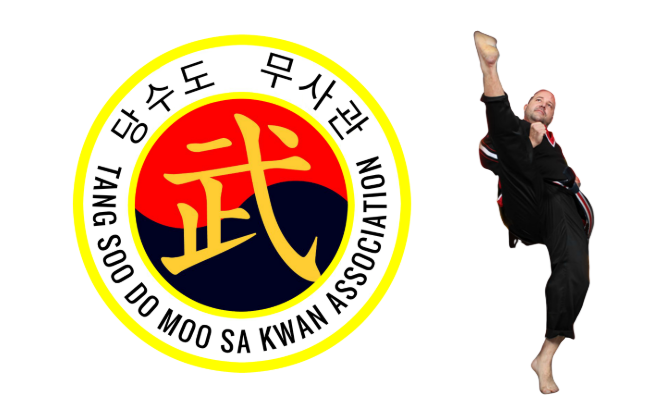
Association Logo
Um/Yang
The center red and blue circular symbol that represents
the dual forces of nature. Yang (red) represents fire and
the aggressive side of nature. Um (blue) represents
water and the passive side of nature
Moo
The Chinese character in the center of the logo is
pronounced Moo In Korean and translates to stop
conflict or “military”. This shows the true nature of
Martial Arts, to stop conflict from outside and from within
ourselves.
Hangul
On the top of the logo are the Hangul (Korean
characters). From left To right they read Tang Soo Do Moo Sa Kwan (Warriors House) Martial Arts Association.
Studio Logo
Fist
The center the fist represents hard work. It also states an intent for training in protection. It is a symbol for justice and strength.
Moo
The Chinese character in the corner of the logo is
pronounced Moo In Korean and translates to stop
conflict or “military”. This shows the true nature of
Martial Arts, to stop conflict from outside and from within
ourselves.
Red swirl
Red represents fire or perseverance. The brush style swirl shows we are training in a continuous circle.

Hanja is the Korean term for the Chinese Calligraphy used in many Martial Arts systems. Hanja is one of the oldest forms of written language.

DoBok (Uniform)
The Korean term “Do Bok” literally means “Way Clothing”—the uniform worn to practice the Way. In our case, it represents our training in Tang Soo Do – Moo Sa Kwan and the values of discipline, respect, and warrior spirit.
At House of Warriors, we use two approved uniform types:

1) Formal / Traditional Uniform (Black)
Our formal Tang Soo Do uniform is a traditional black DoBok, worn for:
Belt promotions / testing
Special events
Seminars
Demonstrations
Competition
While students may wear the formal uniform for regular training, it is primarily reserved for the events listed above.
We use the color black to represent long-term commitment, discipline, and work ethic—a reminder that mastery is earned through consistency over time.

2) Training Uniform (Everyday)
Our daily training uniform consists of:
Official House of Warriors studio t-shirt
Black martial arts pants
This uniform is worn for everyday classes and regular training, allowing students to move comfortably and train with consistency while still representing the school with pride.
Why We Wear Black
In many Korean traditions, Tang Soo Do uniforms are midnight blue, symbolizing depth, maturity, and the night sky. At House of Warriors, we honor that meaning—while choosing black as the official color of Moo Sa Kwan to reflect our identity and philosophy.
Black represents:
The Forge — where steel is hardened. A warrior is built through heat, pressure, and repetition.
Humility — black does not seek attention. It reminds us to train with quiet confidence, not ego.
Unity — black removes distraction and status. On the floor, we are one team, focused on effort and growth.
Commitment — black symbolizes long-term dedication: showing up when it’s hard, staying consistent, and earning progress.
The Unknown — black is the start of the journey. It represents stepping into challenge with courage and learning to overcome what you don’t yet know.
For Moo Sa Kwan, black is not about “being advanced.” It is a reminder of what we train for: discipline, resilience, and character—the qualities that define a true warrior.
(And as always, rank is still represented by the belt—not the uniform.)
Uniform Standards
To maintain a respectful training environment, all students are expected to:
Wear uniforms that are clean and in good repair
No holes, rips, or damaged uniforms during class
Ensure belts are tied correctly and worn properly during training

DI (Belt)
Di is the Korean word for Belt. Originally a belt was used to just keep the uniform together. Over time different color ranks were added to distinguish the expertise of a student.
Students wearing white belt through red are called Gups (novices) those wearing Black are called Dans (advanced students).
Martial Arts belts should only be worn around the waist or folded properly and held in your hand or hanging with the uniform on a clothes hanger.
You should not drag your belt, allow it to touch the ground, or wear it anywhere but your waist (do not sling it over your shoulder or around your neck, for example.)

Stripe & Belt evaluation System
Testing for new belt levels are dependant on age, curriculum & program
General testing is quarterly (every 3 months)
Time requirements increases as you progress in rank
Red belts every 6months
The House Of Warriors only conducts four gup (under black belt) tests per year, and only one Dan (black Belt) grading per year.
During a Gup Members journey, they need to be evaluated along the way before their next belt.
Master Dave Tenedorio (doju) Majored in Health education and believes in constant evaluations. (before your belt exam) consider it like pop quizzes. Instead of a traditional model of testing at the end of your 3 month cycle, which can lead to improper results and lower success rate.
Master Dave & staff prefer to evaluate every few weeks (stripe evaluation) using a color
coordinated system to identify strengths and address weaknesses.
Stripe & Belt Evaluation System Continued

Little Warriors Ages 5-6 stripe evaluation
During our Quarterly teaching block, Little warriros are evaluated every 2 weeks for a skill stripe. Each stripe is color coordinated and relate to a Character Value
Week 1 COURAGE
Try new techniques and face challenges bravely, even if they feel a little scared.
Week 2 DISCIPLINE
good behavior, attentiveness, and following instructions during classes.
Week 3 RESPECT
show respect to their instructors, fellow students, and the martial arts tradition.
Week 4 TEAMWORK
understanding the importance of working together during group activities.
Week 5 PERSEVERANCE
Not giving up, even when a task becomes difficult.
Week 6 HONESTY
truthfulness in actions and words, both in and out of the studio.
Week 7 KINDNESS
Being kind and helpful to others, showing empathy
Week 8 SELF CONTROL
manage emotions and actions, especially in situations where they might feel frustrated
Week 9 FOCUS
Concentration and attention to detail during training sessions.
Week 10 GRATITUDE
appreciation for their instructors, the opportunity to learn, and the support of their family and friends.
All Little Warrior students are evealuated weekly for their skill stripe during our current block (3 months). They are evaluated on the curriculum they have learned currently on class. Once they earn their 10 stripes, They are evaluated for their next belt. If they have demonstrated acceptable knowledge, they are then submitted for promotion.
CSD KICKBOXING Stripe & Belt evaluation System Continued
Little Warriors Ages 5-6 Belt System

Stripe & Belt evaluation System
Warriors Ages 7-up

Week 3 Hand & Foot Techniques
Week 6 Combos/sparring/sticks
Week 9 Escapes/Grappling
Warrior students are evealuated per 3 week cylce during our current block (3 months). They are evaluated on the curriculum they have learned during that 3 week section of that block. Once they earn their 3 stripes, They qualify to evaluated for their next belt. If they have demonstrated acceptable knowledge, they are then submitted for testing & then promotion.
The minimum Attendance/training belt requirements between belts are 3 months (24 classes) per belt. Except Red belts, the minimum is 6 months (48 classes) per exam. Once a student reaches final Red Belt (1st gup) They will go through a 1 year evaluation for preperation to become a black belt candidate.
Stripe & Belt evaluation System Continued
Warriors Ages 7-up Belt System

CSD KICKBOXING Stripe & Belt evaluation System Continued

Stripe & Belt evaluation System Continued
Each belt system is designed with differing age groups in mind. There comes a responsibility and maturity with every level.
Do not focus on the belt, but the journey and process of each rank.
After earning your new rank, take your old one and hang it on the wall. In time as you progress, you will see each old belt on the wall and how close you are getting to your goal. After enough time you will see how far you’ve come and how much you have left to learn and grow.

Preparation for Class
• Please come no more than 10 minutes early for class if you are already dressed in your Do Bok (uniform), and no more than 15 minutes if you need to change before class.
Hygiene & Safety Standards
In Tang Soo Do, cleanliness is part of respect—for yourself, your training partners, and the dojang. Good hygiene also protects everyone’s health and helps maintain a safe training environment.
All students are expected to follow these standards:
Uniforms must be clean and in good repair (no holes, rips, or damaged uniforms).
Maintain good personal cleanliness and hygiene before class.
Fingernails and toenails must be trimmed to prevent scratches and injuries.
No jewelry during training (rings, necklaces, bracelets, earrings, watches, etc.) for safety reasons.
Feet must be clean before stepping onto the training floor.
No walking into the studio barefoot. Shoes must be worn when entering the building and then removed before entering the mat area.
Students should keep personal items stored neatly to help keep the training area clean and hazard-free.
These standards help ensure the dojang remains a place of respect, discipline, and safe training for everyone.
• When waiting for your class to begin, please wait in the lobby and practice Jong Suk (peaceful quiet) to be courteous of the instructors teaching and those wanting to hear the
instructors teachings.
• If you are running late and class is in session. Please wait at the edge of the mat and wait for the instructor to acknowledge you (bow), enter and line up in the back/end. When the command fix ranks is given, then take your appropriate place in line
• If you must eat before class, try to do so an hour before class time, or a small snack before class.
• Parents and spouses, remember that our relationship with your children/loved one is merely
teacher to student, and that your support is required for them to see their full potential. We
encourage you to watch your children/loved ones grow in class.
• Remember the attitude of a Future Black Belt Leader: be kind and courteous, respectful and disciplined.
• When the training floor is open for your class, but the class has not yet begun, salute the flags to enter the floor, and please remember to greet the instructor on the floor by standing at Cha ryut (attention position), making eye contact with the instructor, performing Kyung Ret (the bow).
• If the class has already started, stand ready to enter the Do Jang floor at Charyut, salute the flags, wait for the instructor to acknowledge you, and Kyung Ret/bow. The instructor will then allow you to line up behind the class so that the students already in line are not disturbed. If you would like to ensure that you are lined up in your appropriate place by seniority, please arrive before the beginning of class.
• Finally, when you begin your training, do not concentrate on what happened to you earlier in the day. Focus only on what’s happening right here, right now.
• Most importantly, have a good attitude and have fun!
What to focus on when you train
The 4 Affirmations of Moo Sa Kwan
Sa Heng Chal Huk
These were observations made over time that developed not only into a form of medical diagnosis in Eastern Medicine, but a self defense philosophy as well
The 4 Life Affirmations
1. Warriors train &
failures complains
2. Action Yields Results
3. You Are In Charge Of
Your Destiny
4. Tired Does Not Exist
The 4 Warrior Codes of Tang Soo Do
1. Protect the Weak with Honor and Compassion
We use our skills to support and defend—never to harm, intimidate, or bully.
Kindness is strength.
2. Face Adversity with Justice and Courage
We stand up for what is right, even when it is difficult or unpopular.Do
what’s right, not what’s easy.
3. Never Retreat in Battle
We do not quit when training—or life—gets hard. We meet challenges with perseverance and heart.
Blades sharpen in the fire.
4. Always Finish What You Start
We follow through on our commitments, complete what we begin, and grow through consistent effort.
Success is earned, not given.
3 Areas of Human Development
심 궁 Shim Gung/Mental Effort
네 궁 Neh Gung/Internal Effort
웨 궁 Weh Gung/External Effort
These three core areas are the different types of effort we put into our every day actions.
Examples of how to develop each would include:
심 궁 Shim Gung. Personal Reflection, Improved focus
네 궁 Neh Gung. Proper Breathing during training, Higher Energy & Endurance
웨 궁 Weh Gung. Physical Curriculum, Stronger muscles & bones. Less prone to injury
*It is important to note that proper diet plays just as important a role in the development of Neh Gung as breathing does. Anything that enters your body will either positively or negatively impact you. On the next page, we will have a pictorial outline of curriculum that relates to these attributes.
To Develop Weh Gong
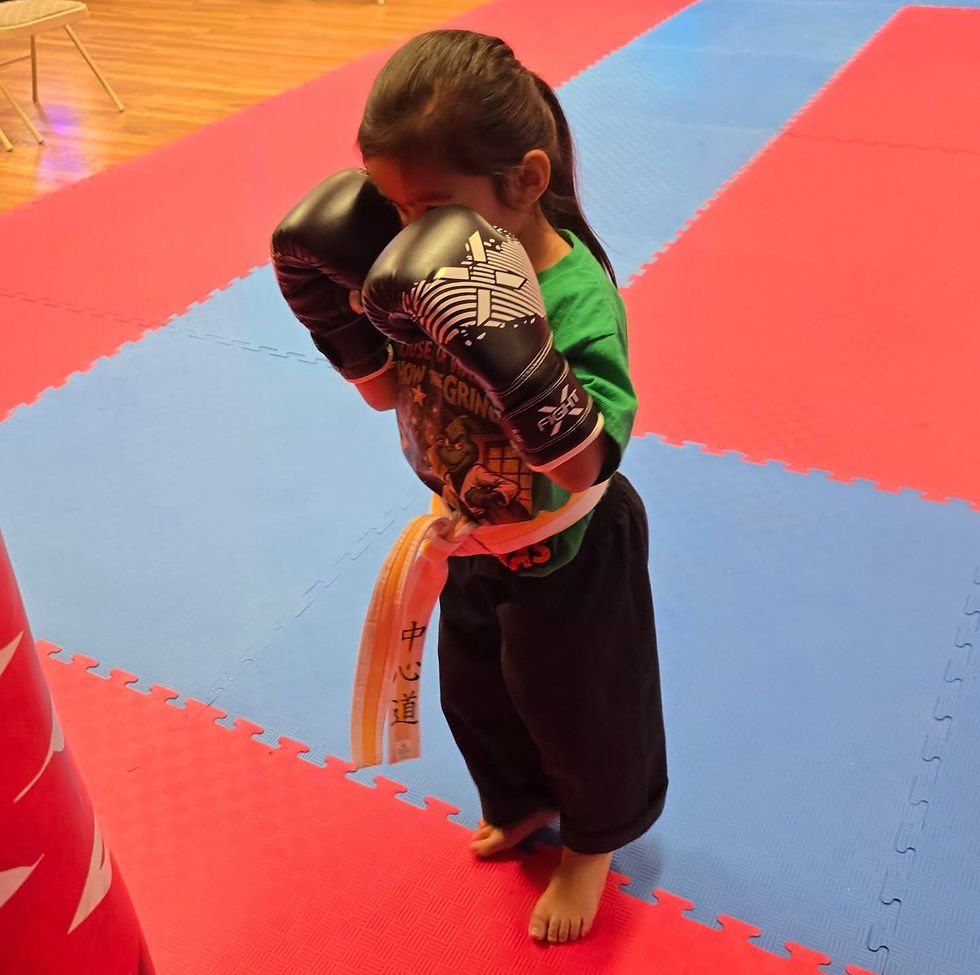
we practice the physical curriculum: blocks, strikes, self defense techniques, weapons & sparring. Practicing our techniques consistently will not only make us better Martial Artists, but healthier as well. A Martial Artist strives for
physical perfection of the curriculum but also realizes there is room for improvement.
As you progress a student, you will see the changes in you physically.
Your muscles will become stronger and more efficient. Techniques that seemed nearly impossible
will become second nature to you.
Always look to improve yourself. When you promote remember there is always more to learn form your curriculum.
Your teacher is a guide and is there to help you
realize your full potential.
To Develop Neh Gong
we practice proper

breath control. We breathe in through the nose and out through the mouth. The
abdomen should expand as we breathe as opposed to the chest expanding. This is a more
efficient way of breathing and not only improves your health, but can enhance your performance.
One set of exercises you will learn is called “Moo Pahl Dan Khum” the eight brocade breathing set. It is set of exercises designed to enhance health of a practitioner. Introduced by a Chinese general to help his soldiers stay healthy before battle, Moo Pahl Dan
Khum has incredible rejuvenation properties.
Many students whom have trained in oou studio have had breathing and other health problems (Asthma). After practicing these techniques for a period of a few months to a year, many have either stopped using their inhalers/ nebulizers, or
use them minimally.
Proper development of the Neh Gung will have profound effects not just in your
health, but in your performance as well. CSD KICKBOXING is an art of balance, and it is important to have balance between the external functions of your bodyand the internal ones as well.
To Develop Shim Gong
Shim Gung literally translates to attitude. A proper attitude is important in Martial Arts training. An improper attitude will hinder a practitioner’s development. The Shim Gung is key to linking all aspects of your training. A good attitude will develop good habits and in turn will create good opportunities for an individual; a bad attitude will create bad habits and will prevent opportunities for an individual. So be positive, and strive to learn.
The Ki Hap 氣合

Ki Hap literally means “Energy Unification” but in its earliest
stages for a student, it’s represented by a yell or a shout. This is the yell that you hear a student add to give emphasis to a particular technique, but the beauty of the Ki Hap isn’t in how loud it is, but how connected you are to yourself.
The Ki Hap is part of your Shim Gung (mental) training. The ki hap shows how dedicated a student is to the perfection of themselves and their techniques. It is more than a yell but an expression of proper attitude. When the Ki Hap is
performed it should not be a yell from the throat but should be a deeper sound coming form the diaphragm/abdomen
Kyeung Ret/ The Bow
The bow is an important part of your training. Literally Keung Ret translates to respect ceremony. It is a form of not just respect for your training partner or teacher, but an act of humility as well. When we bow it shows that we say thank you for the experience and I look forward to what I can learn from you next time.
The bow is not exclusive to Asian Martial Arts. It is part of any martial/feudal culture. In Europe many of the knighthood would use a form of a bow or “salute” to show respect to their Maestro “Master”. This was also done to higher officials in the king’s court. This is where the term “court-esy” comes from.
The bow is a very historic action that connects a practitioner not just to their instructor, but
instructors of the past. When we bow it is a sincere action. A bow is sharp and performed quickly. The practitioner stands at attention bends at the hips at 45 degrees, pauses for a few seconds looking down, then quickly comes back standing at attention.

What to expect when you test
Shim Sa is the Korean term for judging. Depending on the level of student will determine when shim sa/testing wil happen. Testing will occur every three months on an average.

Each class you come to will cover a curriculum that you will test on later. Your progress will be marked by a tip evaluation process every couple weeks. These tips are a way for you to see where your progress is and where you may need to improve. After all your tips are earned you will become eligible for rank promotion at the next group testing.
. All evaluations must be taken in a clean uniform.
2. Stand at attention when you’re unsure what to do. If you can’t hear a command, raise your
hand and say “can you please repeat that, sir/ma’am?” Remember that anyone conducting
the evaluation wants you to look your absolute best.
3. Don’t look around the room. By looking forward you demonstrate your focus.
4. If you make a mistake, don’t worry. Just have a good attitude, Kyung Ret (bow) to
acknowledge the mistake and we’ll give you an opportunity to fix it. Everyone can get
nervous and we understand that. We want to see how you’ll perform when given the chance
to do your best.

General Terminology
Name of the Style:
Tang Soo Do
Leadership Titles:
Doju: Founder/ “keeper of the way”
Sa Bom: Master Instructor 4th Dan or higher
Kyo Sa: Certified instructor 1st to 3rd Dan
Jo Kyo: Apprentice
Commands for class
Followed by these titles depending on whom is running the class:
Sun Beh Nim Keung Ret- Bow to senior student
U Dan ja Kay Keung Ret- bow to Black Belt Member
Jo Kyo Nim Kay Keung Ret- Bow to Assistant Instructor
Kyo Sa Nim Kay Keung Ret- Bow to Instructor
Sa Bom Nim Kay Keung Ret- Bow to Master Instructor
Doju Nim Kay Keung Ret- Bow To Founder
Etiquette:
AhnYong Ha Shim Ni Ka- Korean Greeting
Ka Ham Sam Ni Da- Thank You
Chun Ma Nayo – You’re welcome
Ahnyong Hi Keh Sip Sio – Goodbye (said by Instructor)
Ahnyong Hi Ka Sip Sio – Goodbye (said by students)
Classroom Terms
Won Uichi- Line up
Chan uichi- Return to current position
Jhoon Beh – ready position
Si Jak-Begin
Baro-Return (usually return to Jhoon Beh)
Gumon-Stop
Shio-at ease
Yol Jul Shio-parade at rest
Do bahk-uniform
Di- belt
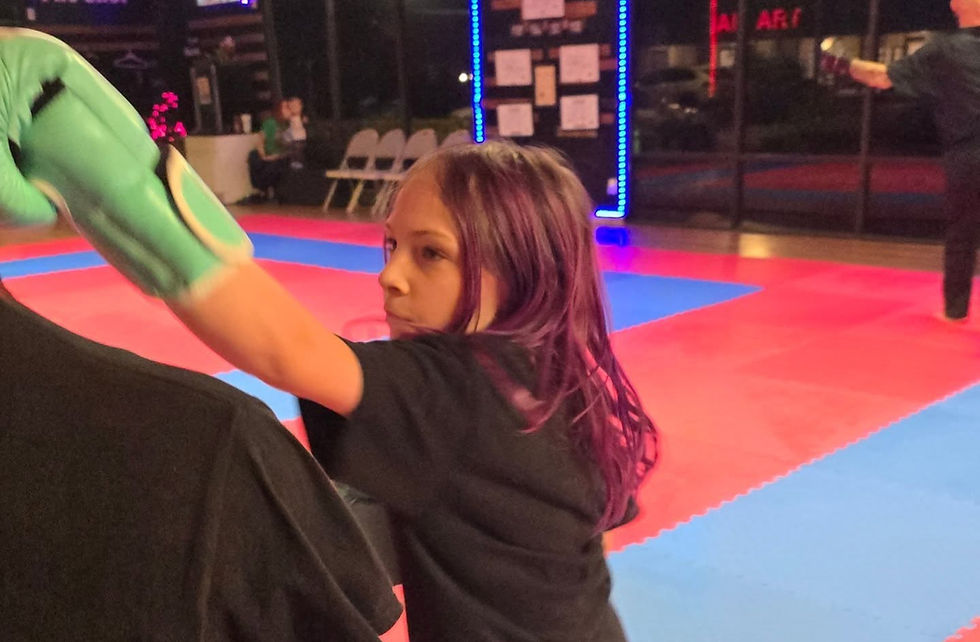
Technical Terms
Ha dan-Low
Choong Dan-Middle
Sang Dan-high
Soo Do-open hand/knife hand
Jang Kwon-Palm Strike
Jung Kwon-closed fist
Kwon Do-hammer fist
Kap Kwon-Back fist
Mahk Kee-Block
Kong Kyok-Attack
Cha Gi-Kicks
Ho Sin Sul- Self defense techniques
YU Sul - Grappling
Jae Dae Ryun- Free Sparring
DIRECTIONS

Popular motivational Phrases
“It doesn’t matter how many times you get knocked down, just get back up again” – Vince
Lombardi NFL Coach
“If you want the rainbow sometimes you have to put up with the rain” – Unknown
“When you’re ready to quit, You’re closer to success”
– Chinese proverb
“If you take shortcuts, it takes you twice as long”
– Portuguese proverb
“Success is built after many failed attempts” -Unknown
“If you fight, then you have already lost; but when you do fight, fight to win, even against great
odds”
– Grandmaster Hwang Kee Founder of the Moo Duk Kwan

Thank you for joing our studio & having us be part of your journey!
See you on the Mats!
Comments